ORDER OPERATIONS SYSTEM
One order, multiple fulfillment paths.
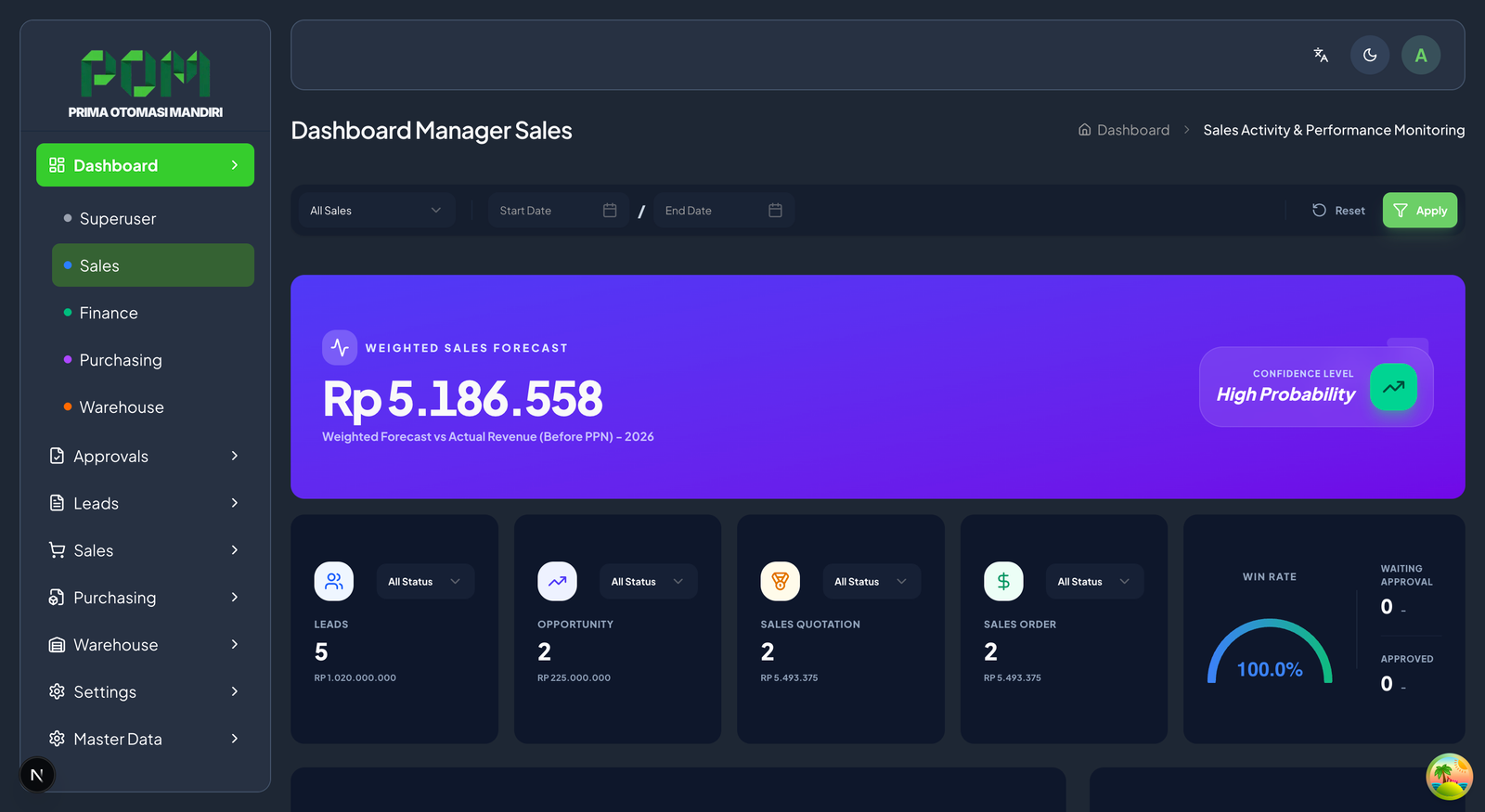
An order-centric operations platform connecting sales, purchasing, warehouse, inventory, and finance around a single operational lifecycle.
Orders were simple on paper.
Fulfillment was fragmented.
In multi-department operations, a single customer order rarely follows a simple linear path. Some items are already on warehouse shelves, while others must be requested from external suppliers with different lead times. When sales, purchasing, warehouse, inventory, and finance rely on fragmented communication, orders lose tracking. Stock gets double-promised, goods arrive at the dock without clear assignment, and deliveries leave before credit terms are verified. The system needed to model these divergent paths explicitly while keeping inventory and financial approvals strictly synchronized.
A single customer order contains items available in warehouse inventory alongside items requiring third-party procurement.
Without transactional state synchrony, stock gets double-promised and shipments leave before credit and physical verification.
Fragmented departmental handoffs obscure accountability between purchasing lead times and customer delivery promises.
One order. Multiple fulfillment paths.
Explore how the system splits each line item into independent operational branches while enforcing strict transactional convergence before dispatch.
Direct Stock Path
Immediate inventory reservation bypassing procurement chains entirely.
Sales Order Confirmed
Line item confirmed & live stock reservation triggered
Atomic Stock Hold
Row-level hold in database transaction locks allocated quantity
Dual-Gate Sign-off
Physical readiness check + financial credit terms verified
Delivery Order Released
Official dispatch notice created and warehouse balance debited
PER-ITEM FULFILLMENT SPLIT
Evaluates each line item within a Sales Order independently, routing in-stock items to reservation and backordered items to procurement.
Customer orders frequently contain both immediately available goods and items requiring vendor procurement. Forcing an entire order into a single fulfillment track creates unnecessary customer delays.
DIRECT GOODS RECEIPT TO INVENTORY
Increments inventory availability directly upon physical warehouse Goods Receipt confirmation.
Separates physical receiving from vendor invoicing schedules, ensuring warehouse inventory reflects actual floor availability without administrative delay.
DUAL-ROLE DISPATCH APPROVAL
Requires sequential authorizations from Warehouse (physical inspection) and Finance (credit and payment standing) before generating a Delivery Order.
Prevents goods from leaving the loading dock before both physical readiness is verified and customer credit terms are validated.
TRANSACTIONAL ROLE BOUNDARIES
Enforces all cross-department handoffs through database transactions and role-based permissions spanning nine operational roles.
Prevents race conditions during simultaneous stock reservations and maintains an auditable chain of custody across departmental transitions.
Engineered for relational integrity.
The platform is built on PostgreSQL and Prisma with relational constraints enforcing state integrity across all operational tables. Business logic and status changes are wrapped in database transactions to prevent race conditions during concurrent stock reservations. A role-based access control layer with nine distinct roles restricts actions to authorized personnel across Sales, Purchasing, Warehouse, Finance, and Administration. Input validation is centralized with Zod schemas on both client and server, while file attachments such as physical goods receipts and delivery notes are stored in MinIO object storage.
CLIENT LAYER
- Next.js App Router
- React 19
- TanStack Query
- Zod Schema Validation
- Tailwind CSS
BUSINESS & DOMAIN
- Server Actions
- Transactional State Machine
- Role-Based Access Control (9 Roles)
- Audit Trail Engine
DATA & INFRASTRUCTURE
- PostgreSQL
- Prisma ORM
- MinIO Object Storage
- Database Transactions
The system establishes a single, deterministic operational backbone across five departments. Sales teams track fulfillment status per line item, warehouse staff verify inventory against physical goods receipts rather than manual logs, and deliveries require verified sign-offs from both operations and finance before dispatch. By replacing fragmented manual coordination with an explicit state machine, the platform enforces accountability and consistency across the entire order lifecycle.
More systems worth exploring.
Explore another project where software, business processes, and practical engineering meet.